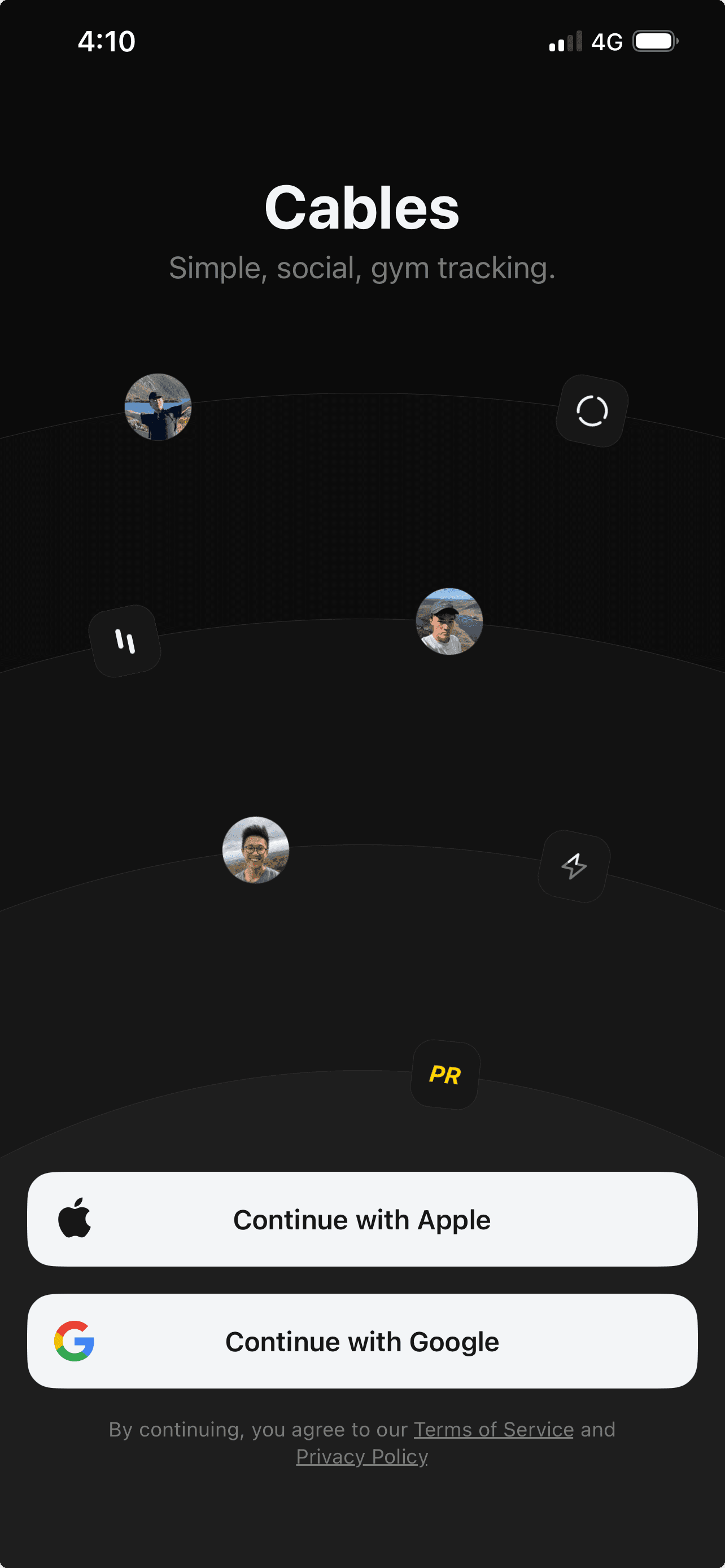
Cables: A simple, social gym tracker.
After a few months of working out, I decided to build my own gym tracking app. Although there are many great options on the market, I never found one I personally resonated with. Over time, small but persistent frustrations built up, and eventually I had enough ideas to create my own solution.
When I started building, I focused on a few core ideas:
1. Simplify the interface
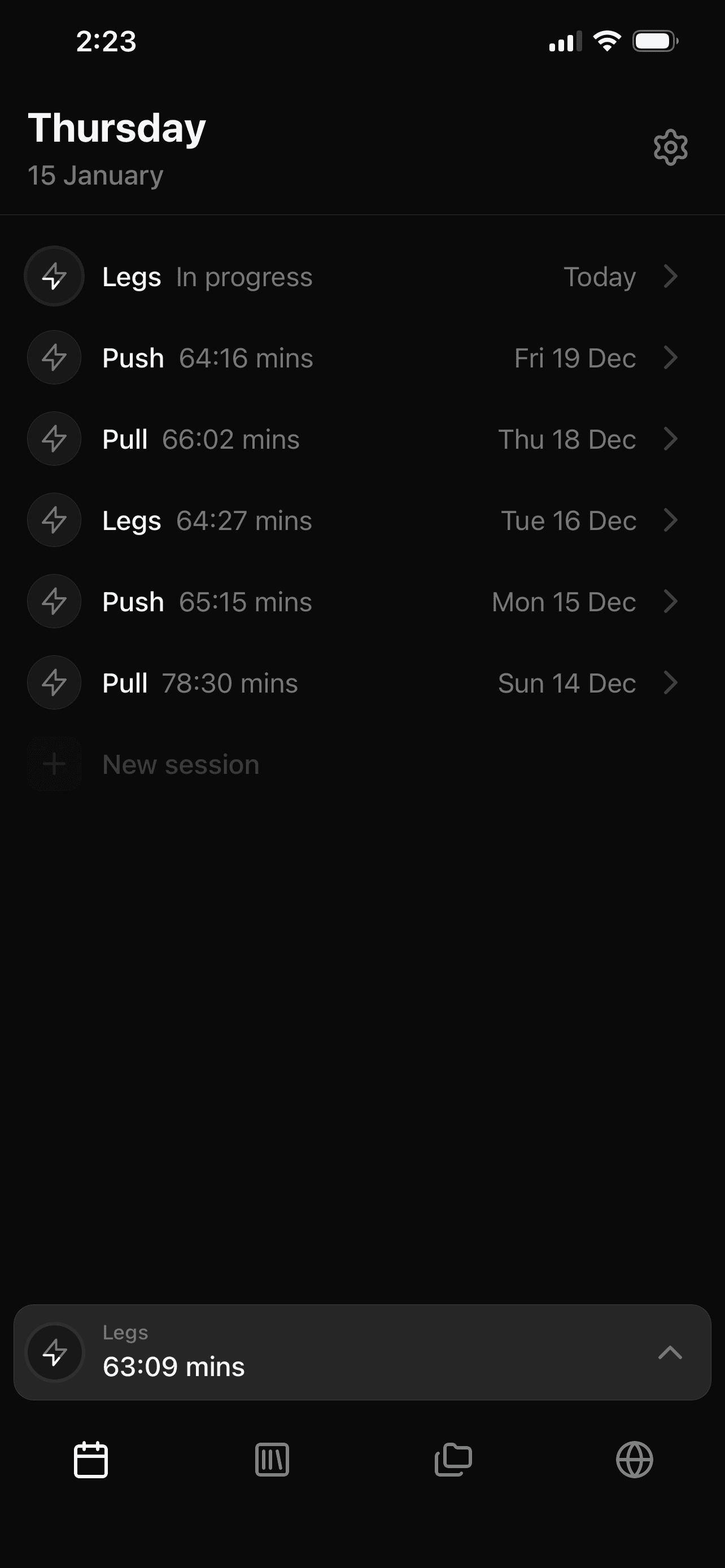
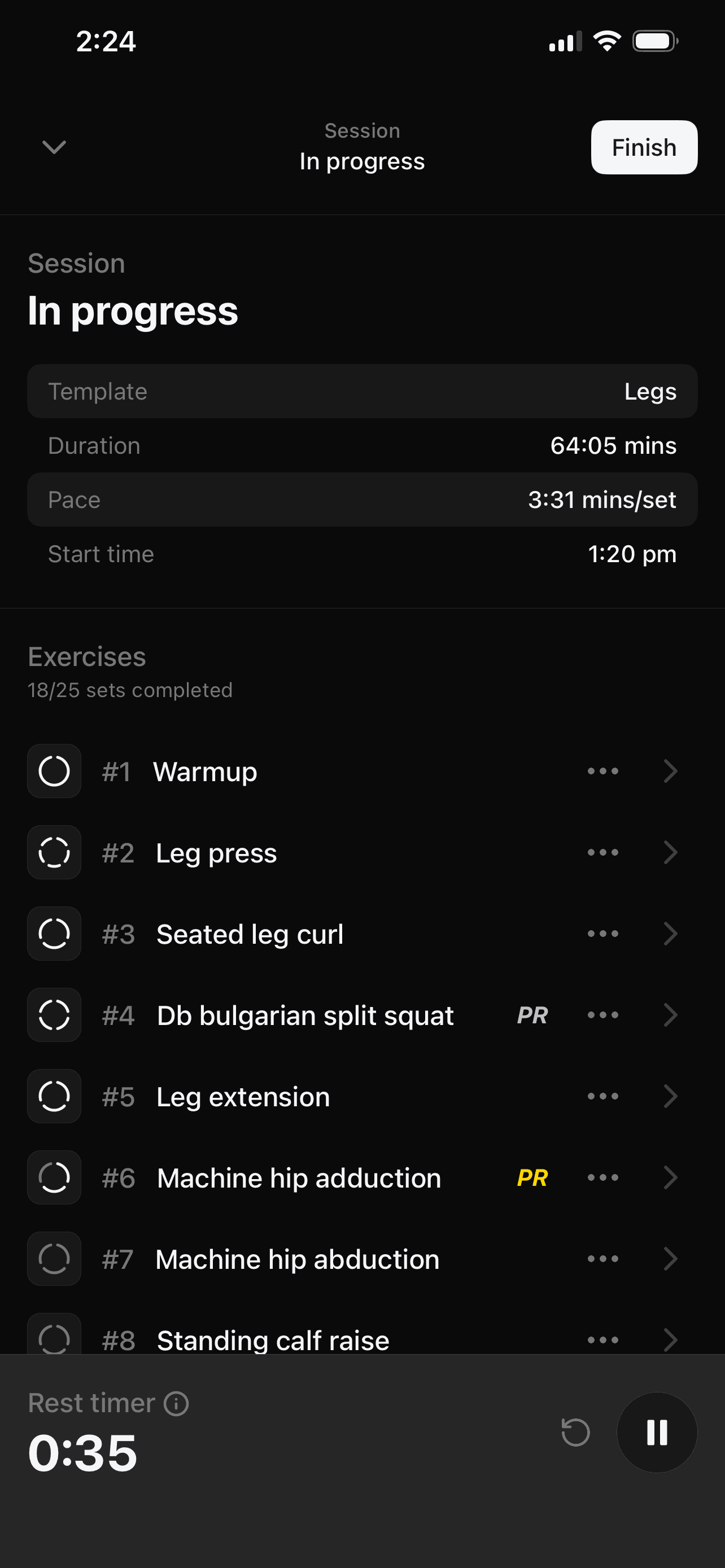
Many gym tracking apps suffer from interfaces that are slow to interpret and difficult to adjust mid-workout. My goal was to create a consistent, unified interface that prioritises clarity for fast, efficient logging.
2. Social accountability
Sharing your journey with friends is one of the most effective ways to stay motivated and accountable. But this only works if progress is easy to see.
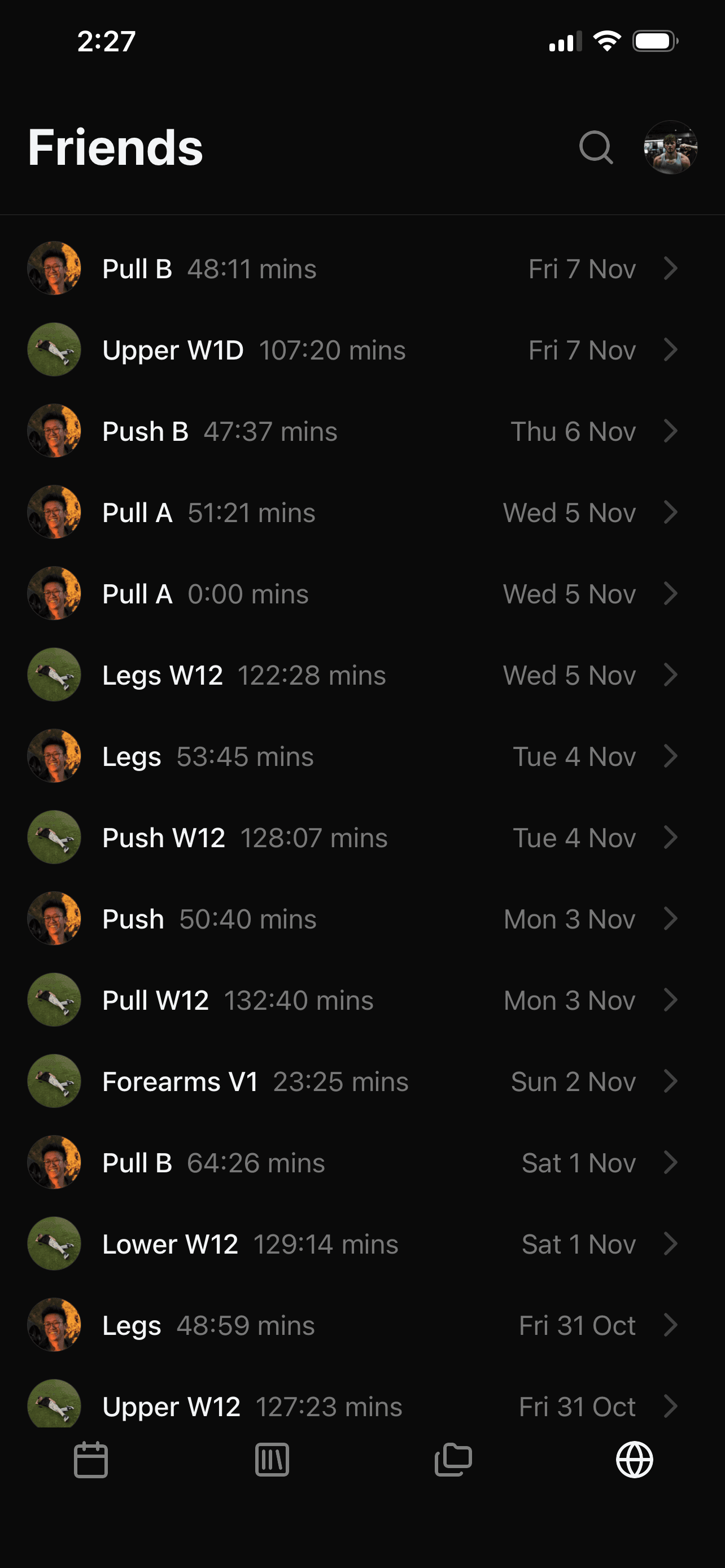
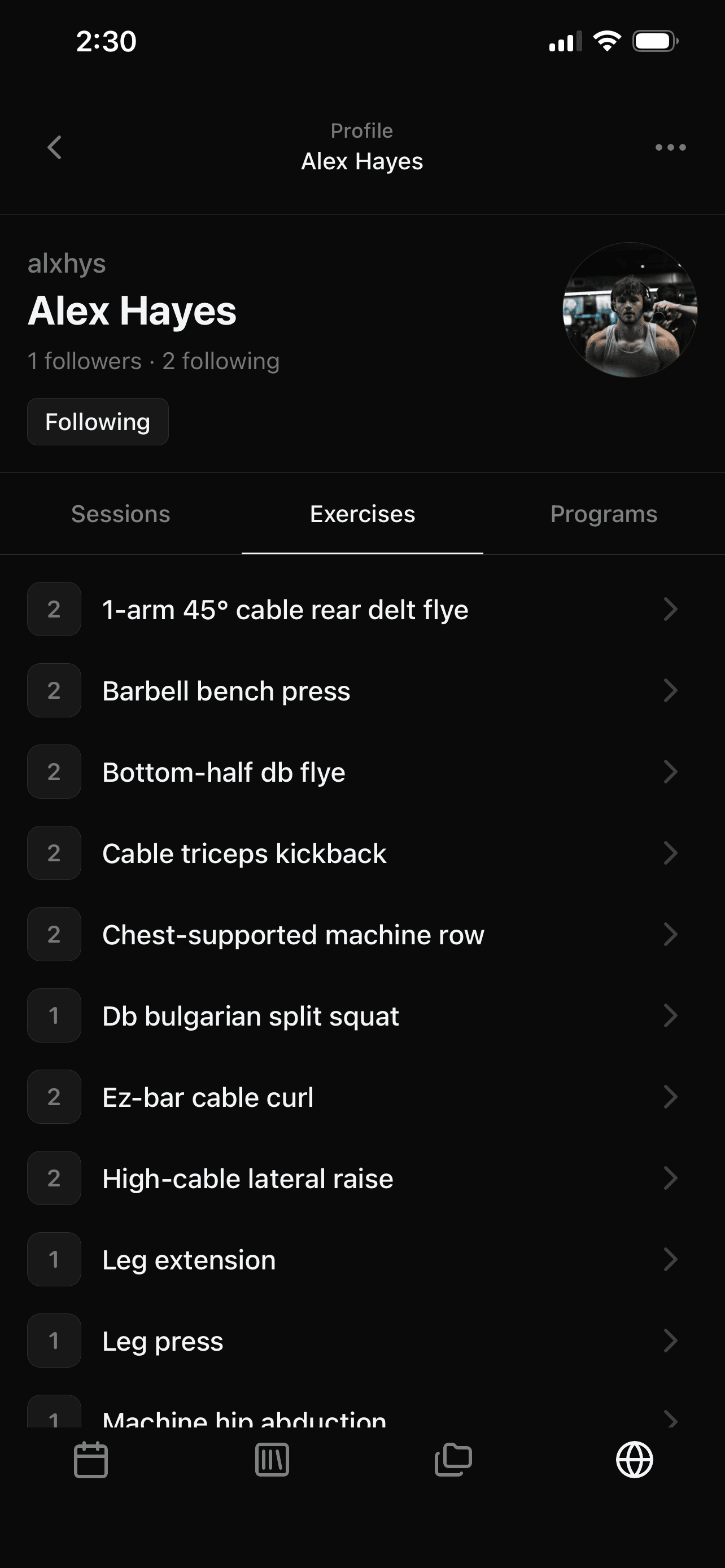
Surprisingly, that clarity is often missing. In one of the largest social gym tracking apps, I found it difficult to view a simple list of a friend's exercises, let alone see how their performance in each exercise has progressed over time. Without that visibility, the social layer loses its purpose.
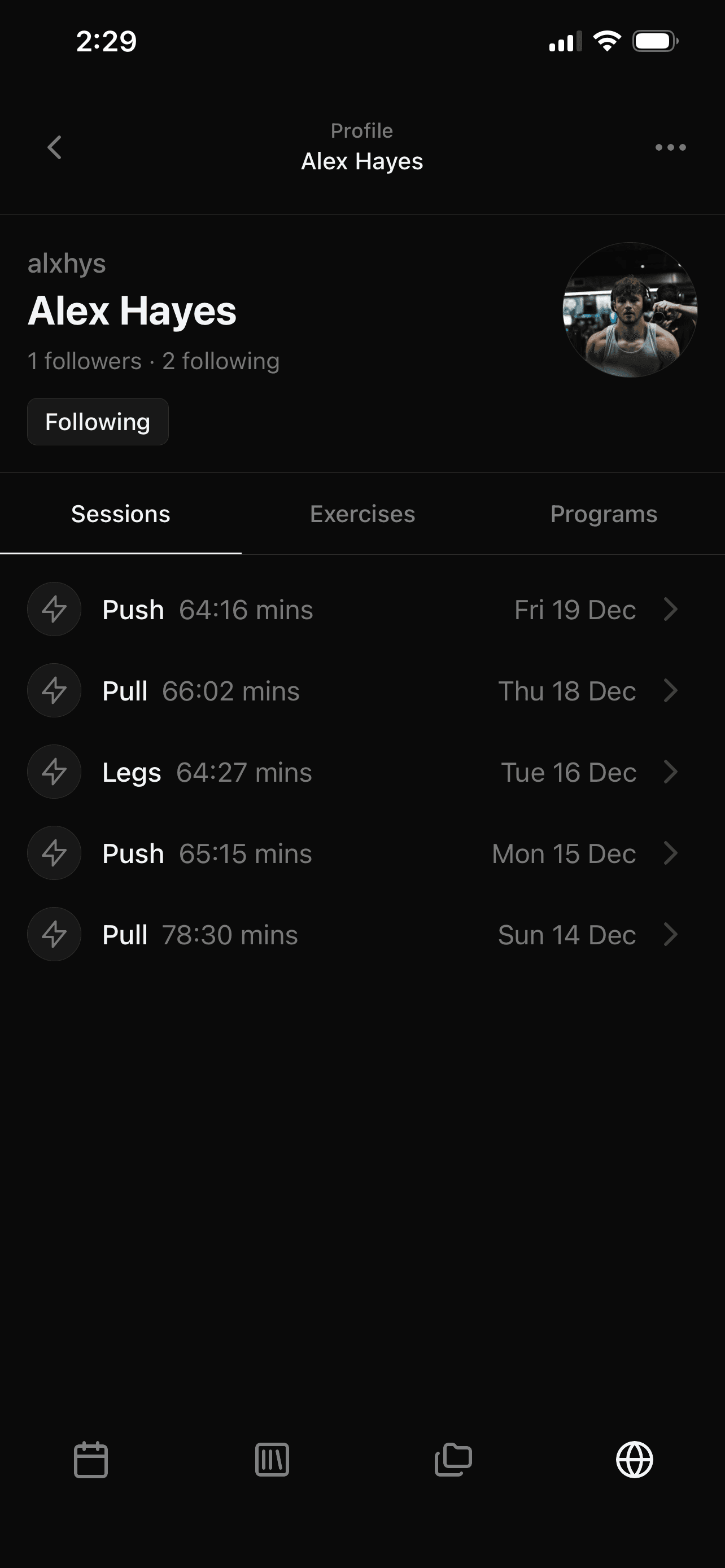
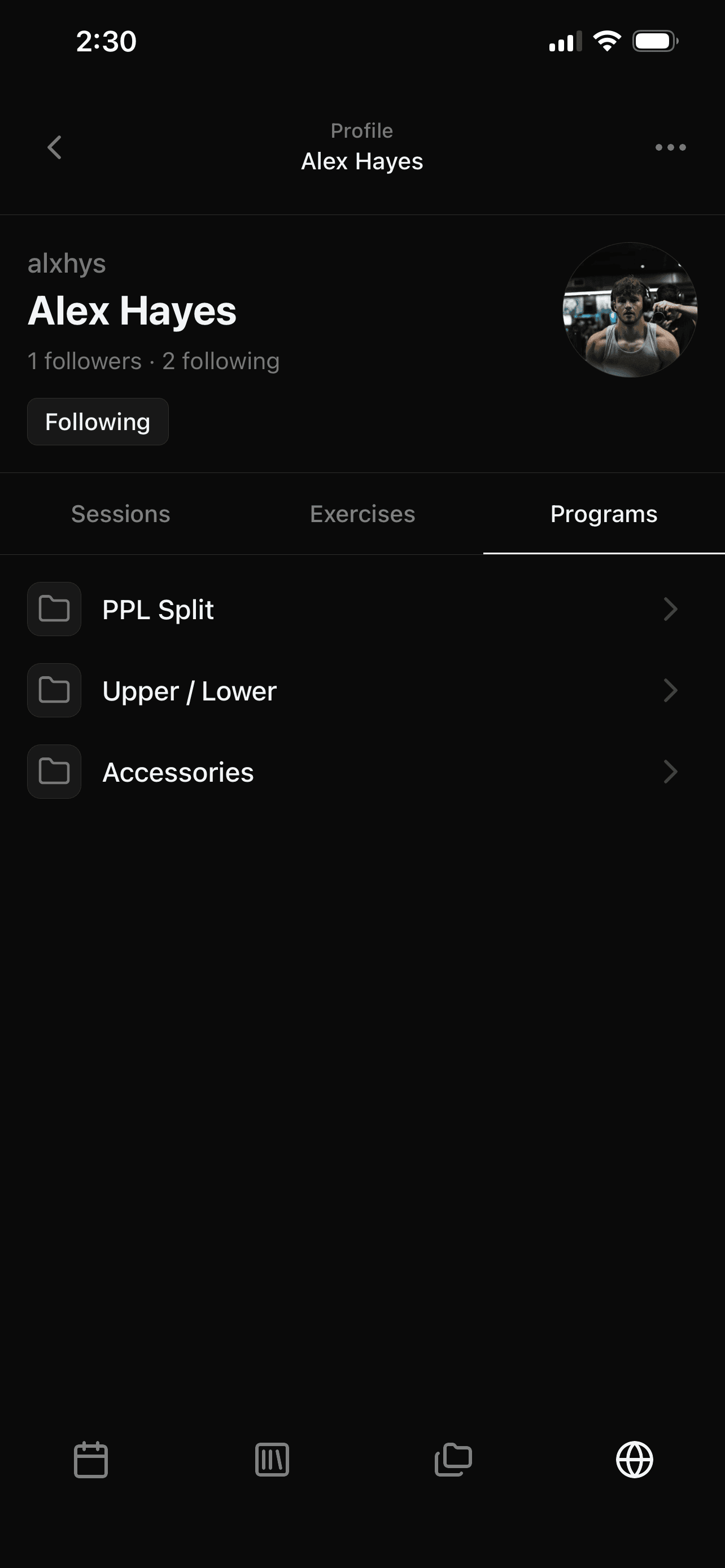
In designing the social experience, I focused on clarity over engagement. It should be effortless to explore a friend's profile, understand what they're training, and see how they're progressing, all while knowing they have the same visibility into your journey.
This shared transparency keeps the social experience purposeful and also makes the product well suited for personal trainers, who need a clear, efficient tool to track multiple clients at once.
3. Simple progressive overload
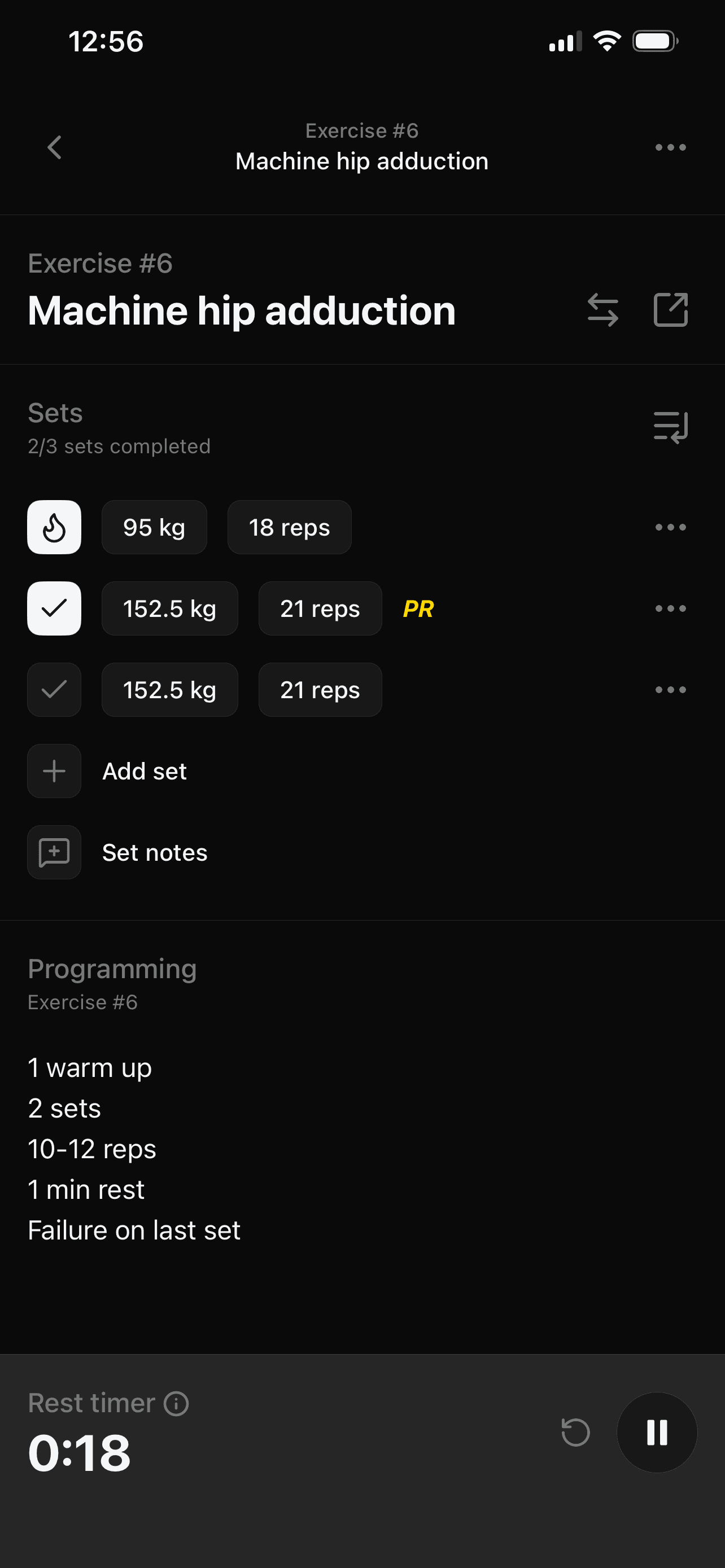
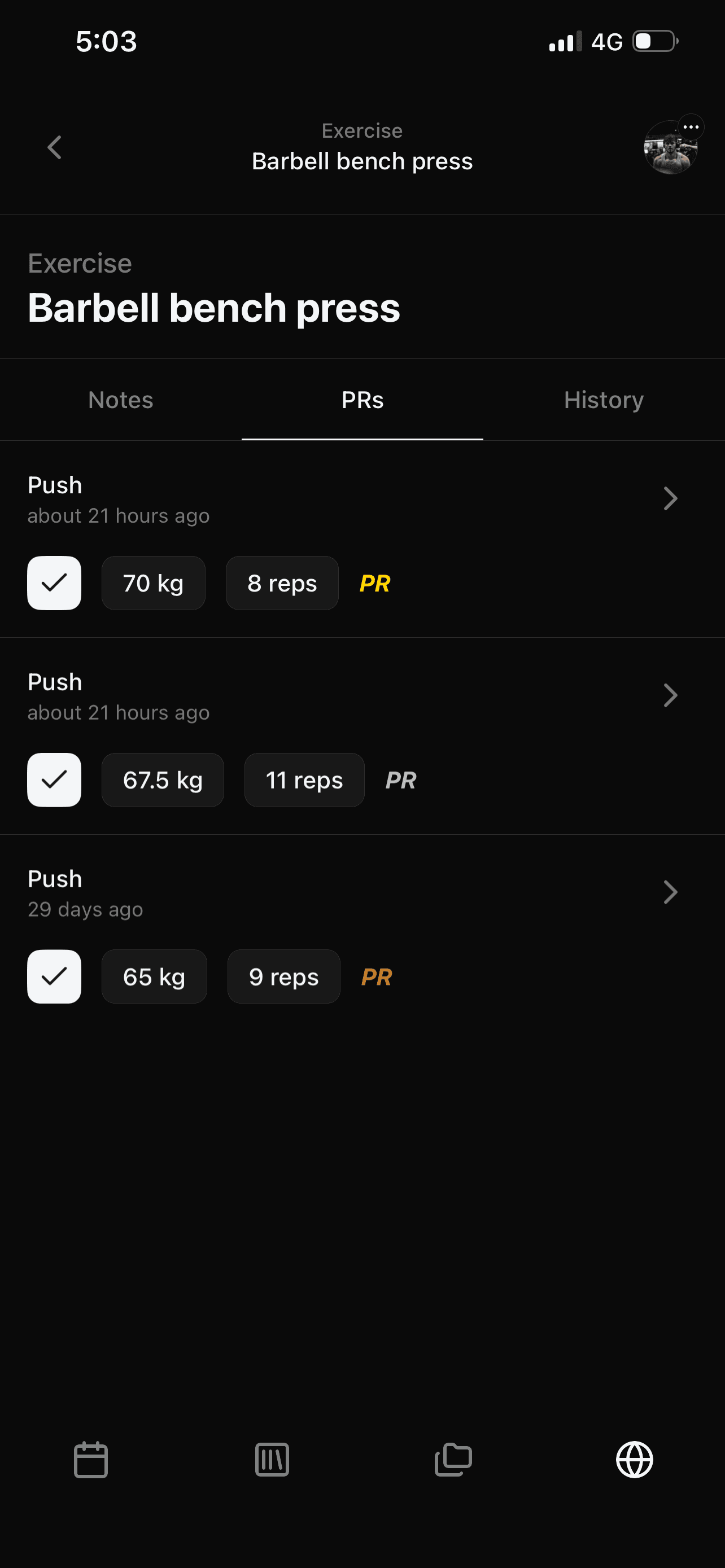
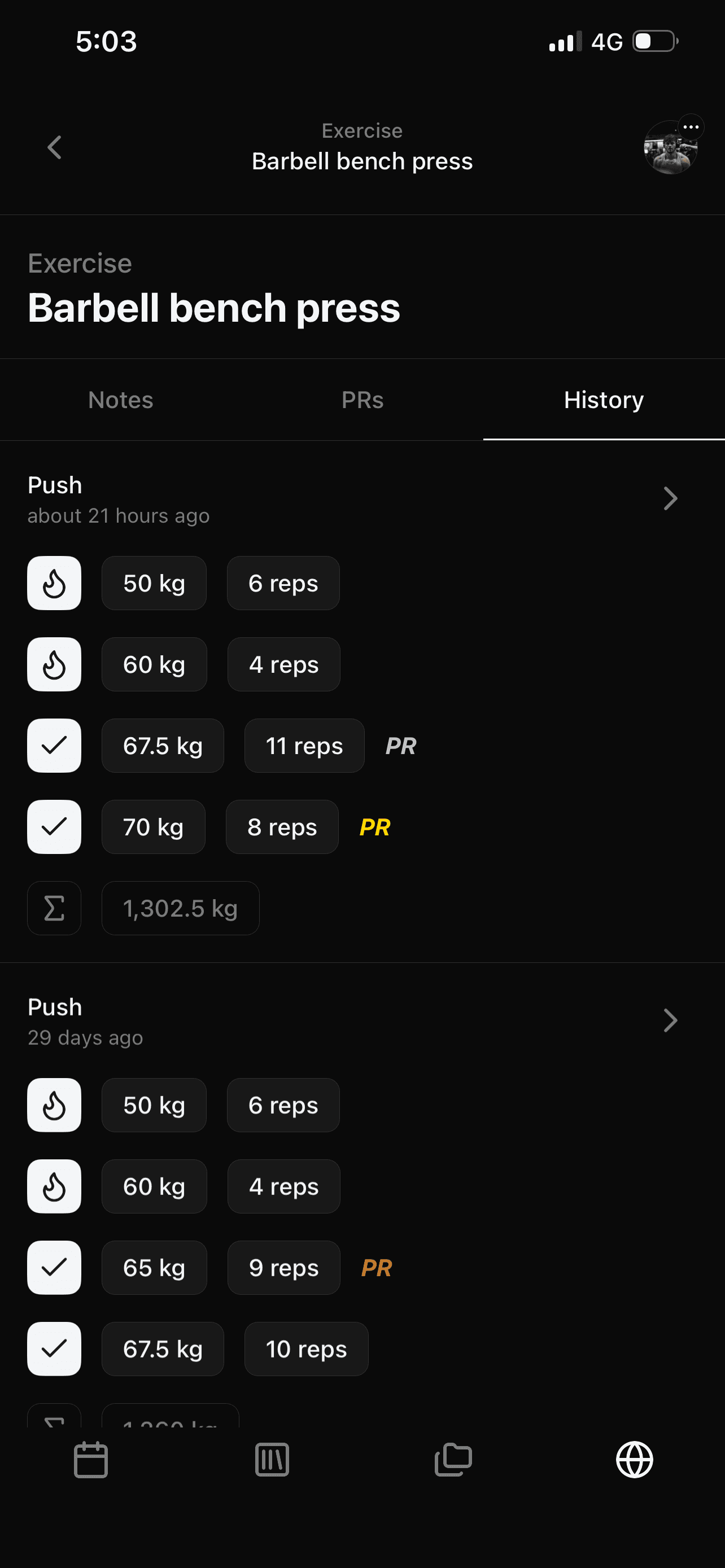
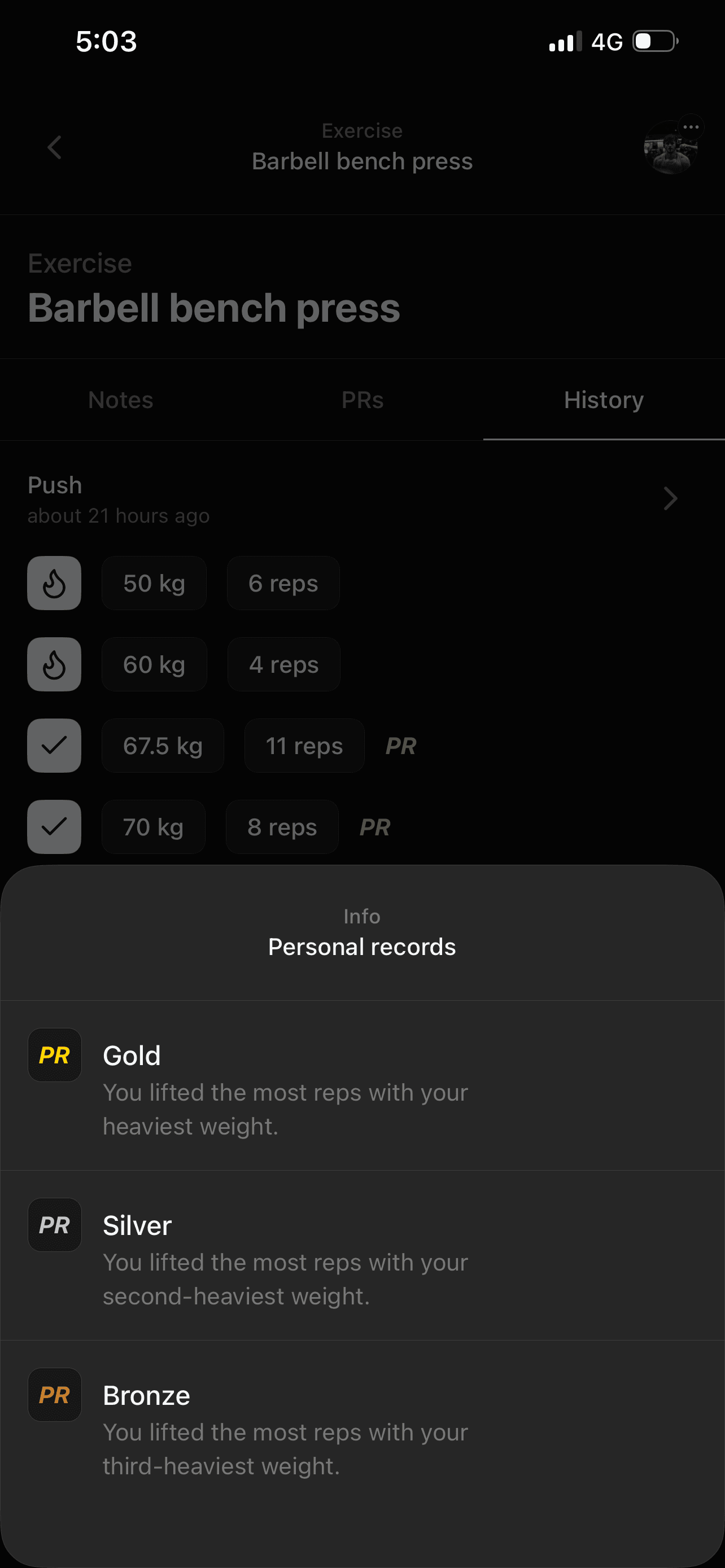
Progressive overload is a key factor in muscle growth, but performance naturally varies between training sessions. To account for this variability while keeping progression easy to track, I decided on a three-tier personal record system:
- PRGold: most repetitions achieved for the heaviest weight used.
- PRSilver: most repetitions achieved for the second-heaviest weight.
- PRBronze: most repetitions achieved for the third-heaviest weight.
This three-tier system incentivises strong performance across multiple weights, encouraging users to push for their best effort even on lower-energy days.
4. Copy sets from past workouts
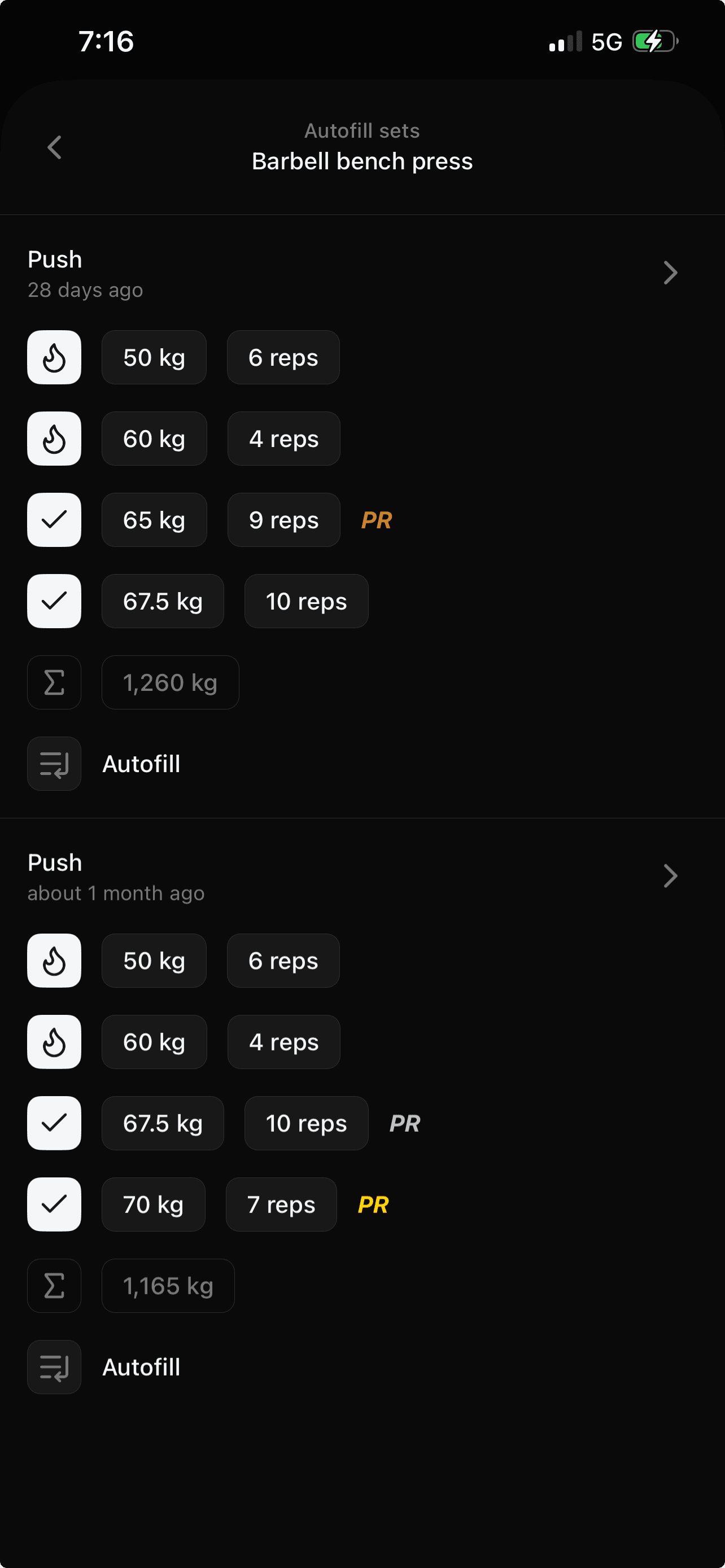
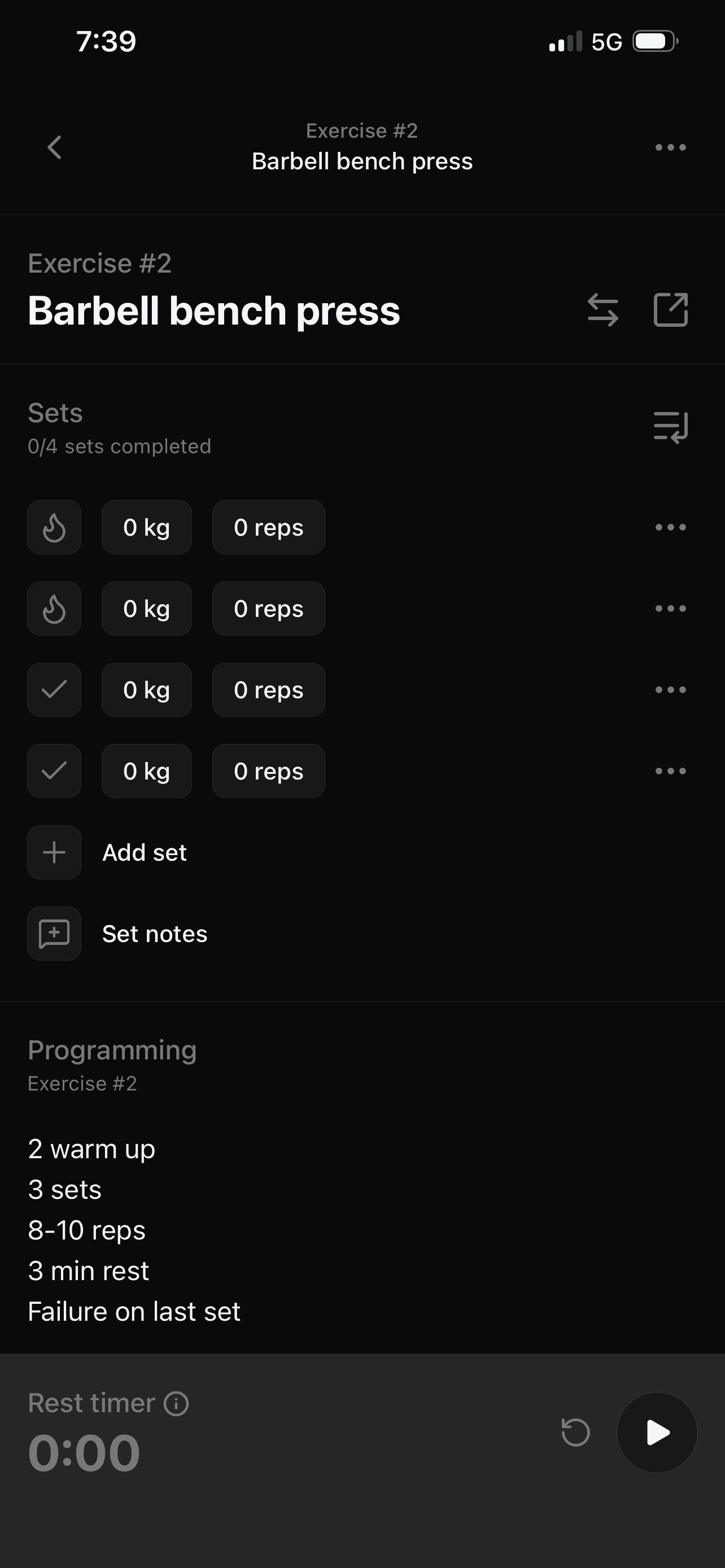
When completing an exercise, users should be able to copy weight and reps from any past workout, not just the most recent one. Most apps assume your last workout is the best reference, but that isn't always true. You may have been fatigued, injured, or deloading. Being able to pull sets from any past session leads to more informed training.
5. Own your exercise library
I wanted a clear separation between your personal exercise library and any curated exercises the app may offer. Your library should reflect how you actually train, without being cluttered by opinionated suggestions. This has the added benefit of making other profiles more valuable to explore, since it gives you a clear view into how your friends or clients structure their training.
6. Automated program import (coming soon)
Personal trainers and fitness influencers regularly share training programs online; however, these programs are typically published in non-standardised formats. This forces users to spend significant time manually re-entering them into gym tracking apps. The goal is to support direct program import from documents such as PDFs or CSVs.
This started as a personal project to solve my own frustrations, and it's still very much evolving. Now that a foundation is in place, my plan is to keep refining the experience and adding features thoughtfully over time. If this way of training and tracking resonates with you, you're welcome to join and help shape what comes next.
Join the beta
Download Cables on TestFlight